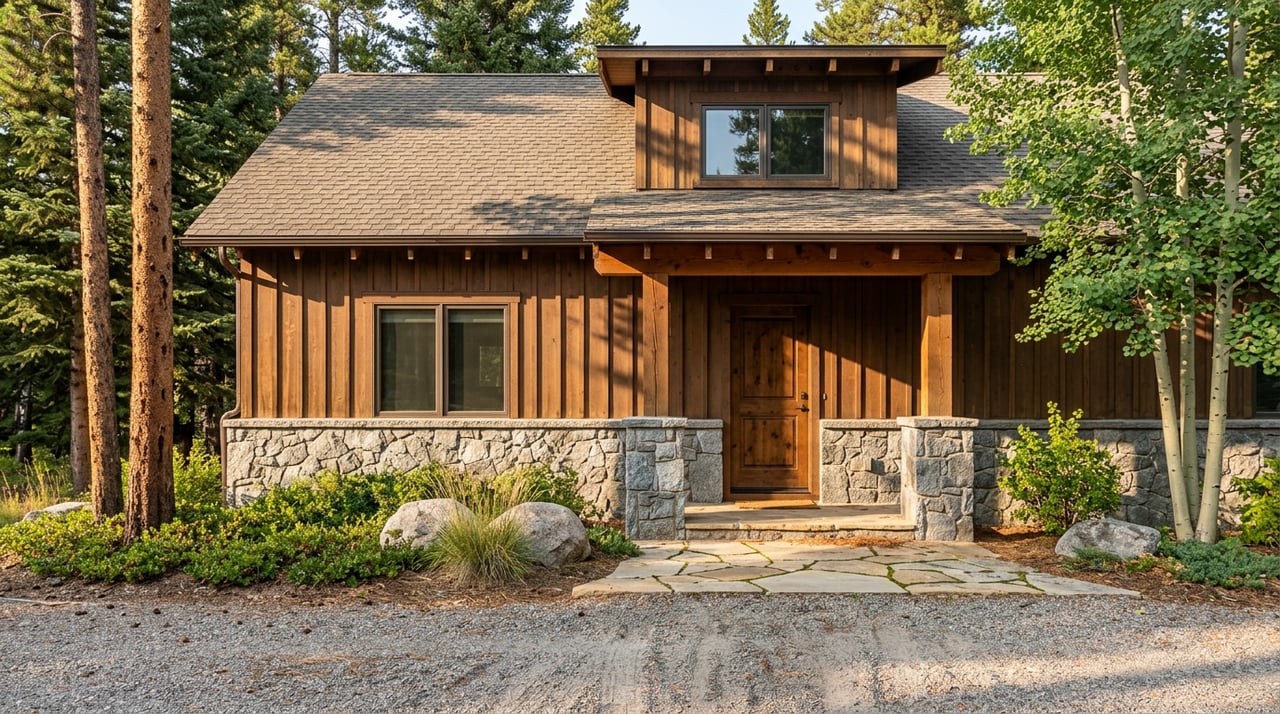
Drive the county roads north of Kremmling on any August afternoon and you'll pass ranchette listings that look nearly identical from the truck window. Same rolling sage, same view toward the Gore Range, same five or ten fenced acres advertised for horses or a hobby herd. The asking prices might sit within a few thousand dollars of each other too. Only one of those two properties can actually grow hay past the Fourth of July.
The difference has nothing to do with soil, slope, or how the listing photos were shot at golden hour. It comes down to a decree filed decades ago in a courthouse water docket, and whether anyone checked it before the offer went in.
What the Median Actually Tells You This Year
The visible number is easy to find. The Colorado Association of REALTORS' report on April 2026 activity puts Kremmling's typical home value at about $538,000, up roughly 1 percent year over year, and the association's own language calls it the county's "value and land story." That figure sits well below Grand Lake's $800,000 median for the same period and roughly in line with Hot Sulphur Springs, which came in near $518,000 and up almost 3 percent.
Bare land tells a similar story at a different scale. Recent listing activity around Kremmling puts average per-acre asking prices for undeveloped and small acreage parcels somewhere in the low-to-mid $30,000s, depending on how the sample is cut. That number is the one most buyers anchor to when they start comparing Kremmling to the rest of Grand County.
None of that tells you what the land can grow, water, or sustain. A price per acre describes what someone paid. It does not describe what came with the dirt.
Water Doesn't Travel With the Deed Automatically
Colorado runs on a legal framework called prior appropriation, summarized by the state's own Division of Water Resources as "first in time, first in right." The person who first diverted water and put it to beneficial use holds priority over anyone who started diverting later, regardless of who currently owns the ground the water crosses.
That priority is not assumed. It has to be decreed by a water court, with a specific date attached, and a Colorado law firm's plain summary of the rule matters more to a buyer than any listing description ever will: water rights in this state are severable from the land itself, meaning a property can change hands without a single acre-foot of water changing hands with it, even when a creek runs directly through the parcel.
Grand County's own water rights page puts a number on how tangled this gets locally. The county counts more than 2,500 separate claims to water across its wells, springs, creeks, and river frontage, all administered by water commissioners who track a system built on seniority calls rather than equal shares. When a senior right holder places a "call" on the river, junior users upstream have to stop diverting so the water reaches the senior claim. There is no splitting the difference when supply runs short.
The Paperwork Has Names, and They're Local
This isn't an abstract legal concept floating somewhere above Grand County. It shows up by name in the water court's own filings. The Division 5 Water Court's September 2025 resume references the Kremmling Sheep Creek Ditch and the North Feeder Ditch, both tied to decrees the Town of Kremmling still relies on for its own water supply. The same filing describes a 1981 agreement between the Grand River Ranch Corporation and the Town of Kremmling, where the ranch corporation agreed to forgo diverting water under its West End Ditch No. 1 right at the Jones Diversion Ditch on the South Fork of Sheep Creek, freeing up water the town could then use under its own decrees.
That agreement is more than forty years old and it is still being cited in active water court paperwork as of last fall. Whoever owns land touched by these ditches today is operating inside decisions made by people who are, in most cases, no longer around to explain them. A title search alone won't surface which decree covers which headgate. That takes a specific water rights lookup, not a general property search.
Why 2026 Is the Year This Stops Being Theoretical
Five miles north of town, Wolford Mountain Reservoir holds up to 66,000 acre-feet of water when full. Built in the mid-1990s under an agreement between the Colorado River District and Denver Water, the reservoir exists specifically to offset Front Range diversions out of the upper Colorado River basin. Its late-season releases are what keep Muddy Creek and the Colorado River flowing through Kremmling once natural runoff tapers off in August and September.
As of April 2026, reporting on the district's drought response described one of the worst snow-drought years on record, with reservoir managers saying Wolford was not expected to fill at all this year. The shortfall was tied to the Historic Users Pool, a 66,000 acre-foot block of water reserved for West Slope entities that predate the Colorado-Big Thompson diversion project, and officials at the time were weighing whether Wolford's limited storage could even make up part of that gap.
This is the mechanism that turns an old decree into something that matters at closing. In a year when reservoir storage runs short, priority date decides whose headgate keeps running and whose doesn't. A junior right on paper stops being a paperwork inconvenience and starts being the reason a pasture goes brown in August while the neighbor's stays green. Seniority is not a nice-to-have feature this year. It is the asset.
A Due-Diligence Sequence That Fits Before the Offer, Not After
Buyers evaluating acreage around Kremmling typically work through a short sequence with a title company or water rights specialist before writing an offer, not after:
- Ask whether any water rights are included in the sale at all, and get that answer in writing rather than assuming a creek or ditch on the property means water rights come with it.
- Request the case number and decree for any water right named in the listing, so it can be looked up directly in Division 5's water court records.
- Confirm whether the right is absolute or conditional. A conditional right has been granted but not yet fully put to use, which changes how reliable it is in practice.
- Get the priority date and compare it against nearby senior rights on the same source, particularly anything tied to Sheep Creek, Muddy Creek, or the Colorado River mainstem.
- Ask about historical use. A right that hasn't been used in years can be vulnerable to an abandonment claim during the state's decennial review process.
None of this replaces a conversation with a water rights attorney or an engineer who can read a decree the way a mechanic reads an engine. It just means the conversation happens before the inspection period closes, not after the well runs dry in a drought year.
Short FAQ
Does land along the Colorado River or Muddy Creek automatically come with water rights? No. Water rights in Colorado are legally separate from land ownership. A property can border a creek or river and still have no attached water right, or one that was sold off separately years earlier.
What's the practical difference between a senior and junior water right? Priority date determines who gets water first when supply runs short. A senior right must be satisfied before any junior right on the same stream system, based on Colorado's first in time, first in right rule.
Does a drought year like 2026 actually affect land value, or just water availability? Both, in different ways. The land itself doesn't change. What changes is how reliable its water supply is, and in a year when a regional reservoir isn't expected to fill, that reliability tracks directly to priority date rather than to acreage or list price.
Kremmling rewards buyers who ask the right question before the acreage number, not after it. John Sanderson and the team at RE/MAX Peak to Peak work Grand County's ranch and river corridor daily and can help you find out what's actually attached to a parcel before you write an offer. Search listings or get an instant valuation to start the conversation.