If you're comparing Grand County towns right now, you've probably already seen the number: Winter Park's median listing price finished 2025 down about 8.5 percent year over year, closing near $849,000, with homes sitting on the market for roughly 104 days according to the Colorado Association of Realtors' January 2026 recap. In a market that spent most of the last five years going one direction, that kind of drop reads like an invitation. Buyer's market, more room to negotiate, maybe even a discount hiding in the data.
What Alterra's Investment Really Means
Here's the question worth sitting with before you write an offer based on that number: if prices are actually softening, why is Winter Park Resort's parent company, Alterra Mountain Company, in the middle of financing a base-area redevelopment reported at $2 billion, and why is the town processing an application for more density on land it hasn't built out yet? Those two things don't usually happen at the same time in a market that's genuinely cooling. They happen when a market is splitting into two markets and reporting the average of both as one number.
Key Takeaways
- Winter Park is not experiencing a traditional housing downturn.
- New construction is lowering median prices.
- Resort-area investment continues to accelerate.
- HOA costs can matter more than purchase price.
- Buyers should compare neighborhoods—not county averages.
Winter Park Housing Market at a Glance (2026)
Metric | Current Trend |
|---|---|
Median Price | ↓ roughly 8.5% year over year |
Inventory | Increasing |
Days on Market | Longer than 2024–25 |
Negotiating Power | Better for buyers |
Long-Term Development | Very strong |
Resort Investment | $2B redevelopment underway |
The number is real. The story behind it isn't uniform.
Grand County as a whole told a similar story to Winter Park through the end of 2025: median listing prices fell about 8.4 percent to roughly $838,000, inventory grew, and days on market stretched into the 87 to 100 day range, per the same Colorado Association of Realtors report. By the first quarter of 2026, county-wide median sale price was hovering closer to $866,600, with homes typically closing at 96 to 97 percent of list price, a gap that gives buyers real room to negotiate but isn't the kind of collapse that shows up in a true downturn.
None of that is wrong. It's just an average, and averages flatten out exactly the kind of divergence that matters most to a buyer trying to time an offer. A median is the midpoint of everything that sold, whether it's a no-frills condo a mile from the base or a custom home on a river-adjacent lot. When the mix of what's selling changes, the median moves even if no individual property's value changes at all.
Why Are Winter Park Home Prices Falling?
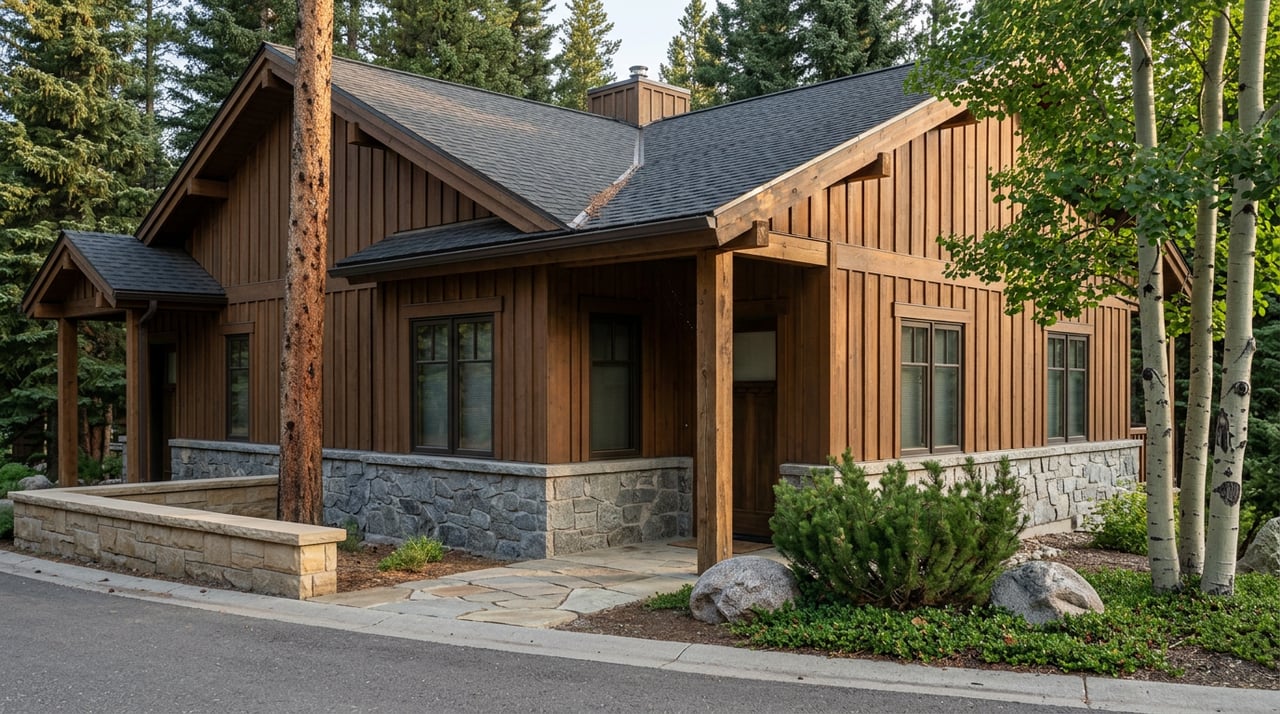
Some of what's dragging Winter Park's median lower is new supply entering at a genuinely different price point than the older base-area stock it's being averaged against. Sojourn at Idlewild, a new-construction townhome community from Highland Development Co. built on former ski-slope land near downtown, is marketing itself around two specific facts: no HOA dues, and the lowest price per square foot in town. Sojourn at Idlewild says eligible buyers can also apply the Grand County Resident Program, which knocks $100,000 off qualifying townhomes.
That combination matters more than it looks. A townhome with zero monthly HOA obligation isn't just cheaper to buy. It's structurally a different product than a base-village condo carrying a few hundred dollars a month in dues, and when enough of those close in the same reporting period, they pull the median down without a single existing owner losing equity.
Where Are Buyers Still Paying Premium Prices?
At the other end of the same market, capital is moving toward scarcity, not away from it. As of a June 2026 public notice, the Town of Winter Park's planning department was processing a resubdivision of Rendezvous Filing No. 1, an application covering roughly 7.62 acres that increases the unit count on that parcel from 16 to 24 dwellings and reconfigures Road K to support the added paired and detached single-family homes. That's a town processing an application that proposes more homes on land that hasn't been built yet, which is not what a market in genuine retreat usually does.
Layer in the base-area picture. Winter Park Resort's reported $2 billion redevelopment is expected to add inventory to Grand County and increase demand for better-priced housing around it, according to reporting from the Steamboat Pilot in December 2025. A rezoned base area with a resort operator publicly financing that scale of investment isn't a signal that values are dropping. It's a signal of planned development while the market catches its breath.
A softening median and a $2 billion base-area investment aren't contradictory signals. They're two different parts of the same market moving at two different speeds.
The dues are the real swing factor, not the sale price
Here's the part that catches buyers off guard at the contract stage, not the search stage. In Winter Park, the range in monthly HOA obligations across otherwise comparable condos is often wider than the range in sale price itself. Some base-area two-bedroom units are advertised with dues comfortably under $1,000 a month. Others carry quarterly assessments that swing by thousands of dollars in a single year: one base-area listing showed HOA dues rising from roughly $6,554 in a 2025 quarter to $6,902 in the first quarter of 2026 to cover a final hot tub assessment, then dropping back to about $4,241 per quarter for the rest of the year once that project closed out.
That's a difference of more than $10,000 a year in carrying cost between two units that might list within $50,000 of each other. And building-level rules can matter just as much as the number. The same purchase price can come with very different income potential depending on which HOA you're actually signing up for.
A buyer comparing two listings on price alone is comparing the wrong number. The question that actually predicts your monthly cost is which of these four categories the specific unit falls into:
- New construction with no HOA, like Sojourn at Idlewild, where the carrying cost is closer to taxes and insurance alone.
- Older base-village condos with active reserve projects, where dues can spike for a year or two to fund a specific capital item before settling back down.
- Single-family homes on individual lots, largely insulated from HOA volatility but exposed to the county's broader 87 to 100 day market timeline.
- Parcels near active redevelopment or resubdivision, like the Rendezvous Filing No. 1 area.
Should You Buy in Winter Park, Fraser, Granby, or Grand Lake?
Zoom out and the same pattern holds. In one week in May, 80 new listings hit the Grand County MLS, and six went under contract: two condos in Beaver Village and four homes in the greater Granby area. That's not a market frozen by falling prices. It's a market where specific, identifiable product is still moving while the aggregate days-on-market number stretches out because so much of the new inventory hasn't found its buyer yet.
If you're cross-shopping Winter Park against Granby, Fraser, or Grand Lake right now, the county-wide median of roughly $838,000 to $866,600 is a reasonable starting point for expectations. But inside Winter Park specifically, the more useful question isn't where the median sits. It's whether a given listing belongs to the no-HOA new-construction wave pulling the number down, or to the base-area redevelopment story pulling future value up, because those two stories are currently being reported as one trend line.
What We're Watching
- How quickly new Sojourn inventory is absorbed.
- Future phases of the Alterra base-area redevelopment.
- HOA reserve studies across older condominium projects.
- Whether buyers continue favoring lower-maintenance townhomes over older resort condos.
- Inventory levels entering the 2026–2027 ski season.
FAQ
Does a falling median mean I have more room to negotiate in Winter Park right now? Somewhat, and county-wide data backs that up: homes are closing at 96 to 97 percent of list price as of early 2026, which does favor buyers. But that negotiating room applies more consistently to older inventory competing against newer product than it does across the board.
Is the $2 billion base-area redevelopment actually approved, or is it still just a plan? Design concepts have gone in front of Town Council, but a project at that scale moves in phases over years. Buyers should treat it as a real, funded direction rather than a rumor, while confirming current status directly with the Town of Winter Park before assuming any specific timeline.
Are all Winter Park condos eligible for short-term rental? No. Short-term rental use can vary by building. Always confirm a specific building's STR rules before assuming rental income is part of the deal.
What is the Grand County Resident Program, and does it apply to every new-construction listing? It's a discount program, currently offering up to $100,000 off eligible townhomes at developments like Sojourn at Idlewild, aimed at qualifying Grand County residents. Eligibility and availability vary by development and by buyer, so confirm current terms directly with the builder before counting on it in your budget.
Reading a Winter Park listing correctly right now means asking which submarket it actually belongs to before you ask what it's worth. John Sanderson - RE/MAX Peak to Peak works these distinctions daily across Winter Park, Fraser, Granby, and the rest of Grand County. Search Listings & Get an Instant Valuation to see where a specific property actually sits in this market.
This article is general information, not legal, tax or financial advice. Consult a qualified professional about your situation.